Jamaican Food Centennial: Tasting the Past, Present, and Future
A centennial invites a certain kind of attention. It slows people down. It asks what has endured, what has changed, and what has been quietly lost while everyone was busy admiring the obvious. When the subject is Jamaican food, that kind of reflection feels especially worthwhile. Few cuisines carry history so visibly on the plate. Fewer still manage to be so deeply local and so widely traveled at the same time.
The phrase jamaican food centennial suggests more than an anniversary meal or a themed festival. It suggests a long look across one hundred years of cooking, planting, trading, improvising, and feeding people under changing conditions. It asks us to taste time itself. Not in an abstract way, but in pepper heat, smoke, starch, salt fish, coconut milk, pimento, cane, and rum. In the rough edges of a bammy cooked over open flame. In the patience required for a proper pot of red peas soup. In the Sunday expectation of rice and peas that is never just rice and peas.
Jamaican food has never been static. That is one of its strengths. It was shaped by Indigenous knowledge, African technique, European colonial systems, Asian migration, and the practical habits of island life. It absorbed scarcity and abundance with equal seriousness. It made room for cassava, breadfruit, Scotch bonnet, curry powder, Chinese-style fry techniques, Rastafarian ital philosophy, tinned goods, roadside grill culture, and diaspora adaptation. If you want to understand Jamaica beyond postcard images, the kitchen is one of the most honest places to start.
The old structure of the Jamaican table
To talk about a century of Jamaican food, it helps to begin with the meal patterns that anchored everyday life. For much of the twentieth century, especially outside affluent households, cooking was built around what was available, affordable, and filling. That sounds simple, but there was discipline inside that simplicity. A household cook had to know how to stretch ingredients without flattening flavor. She knew which provisions would keep, which fish needed immediate salting or frying, and how to turn bones, trimmings, or a single salted piece of meat into a whole pot with enough body to satisfy several people.
Ground provisions were central. Yam, coco, cassava, green banana, dasheen, and sweet potato did more than fill space on the plate. They reflected agricultural rhythms and local resilience. When wheat products became more common, especially bread and crackers, provisions did not disappear. They remained markers of a deeper food memory, one connected to land and labor rather than imported convenience.
Saltfish deserves special mention because it tells a hard truth about Caribbean food history. Its place in Jamaica cannot be separated from Atlantic trade and colonial economies. Yet the dish that emerged from those systems, ackee and saltfish, became something wholly Jamaican in expression. The genius lies in how strongly the local ingredients answer one another. Ackee is soft, rich, almost buttery when cooked properly. Saltfish brings salinity and structure. Onion, scallion, tomato, thyme, and Scotch bonnet complete the conversation. Done well, it tastes balanced rather than heavy, and deeply familiar rather than ceremonial.
Soup also reveals how Jamaican cooks think. A real Jamaican soup is often closer to a meal than a starter. It builds flavor in layers and values texture as much as broth. Pumpkin soup, mannish water, fish tea, gungo peas soup, and red peas soup each speak in a different register, but all depend on extraction. Time matters. Dumplings swell, peas soften, meat gives up depth, herbs release fragrance. These are not rushed foods. They reward attention and punish impatience.
The market, the yard, and the roadside
Any serious discussion of Jamaican food over the last hundred years has to include where food is bought and cooked. The market has long served as a nutritional center, social exchange, and barometer of seasonality. If you know how to walk through a Jamaican market, you can read the island’s current mood. Heavy rain in the hills, drought in a farming district, rough seas affecting fish landings, export pressure on certain crops, holiday demand for sorrel or gungo peas, all of it leaves traces in price and availability.
Then there is the yard, the domestic space where much of Jamaica’s culinary intelligence has been preserved. The yard is where children learn that coconut milk can come from labor, not a carton. It is where a breadfruit is roasted directly over fire until the skin blackens and the flesh turns smoky and soft. It is where Sunday dinner acquires its emotional charge, not because the menu is rare, but because repetition builds belonging. When people speak nostalgically about Jamaican food, they often mean yard food, even if they do not say so directly.
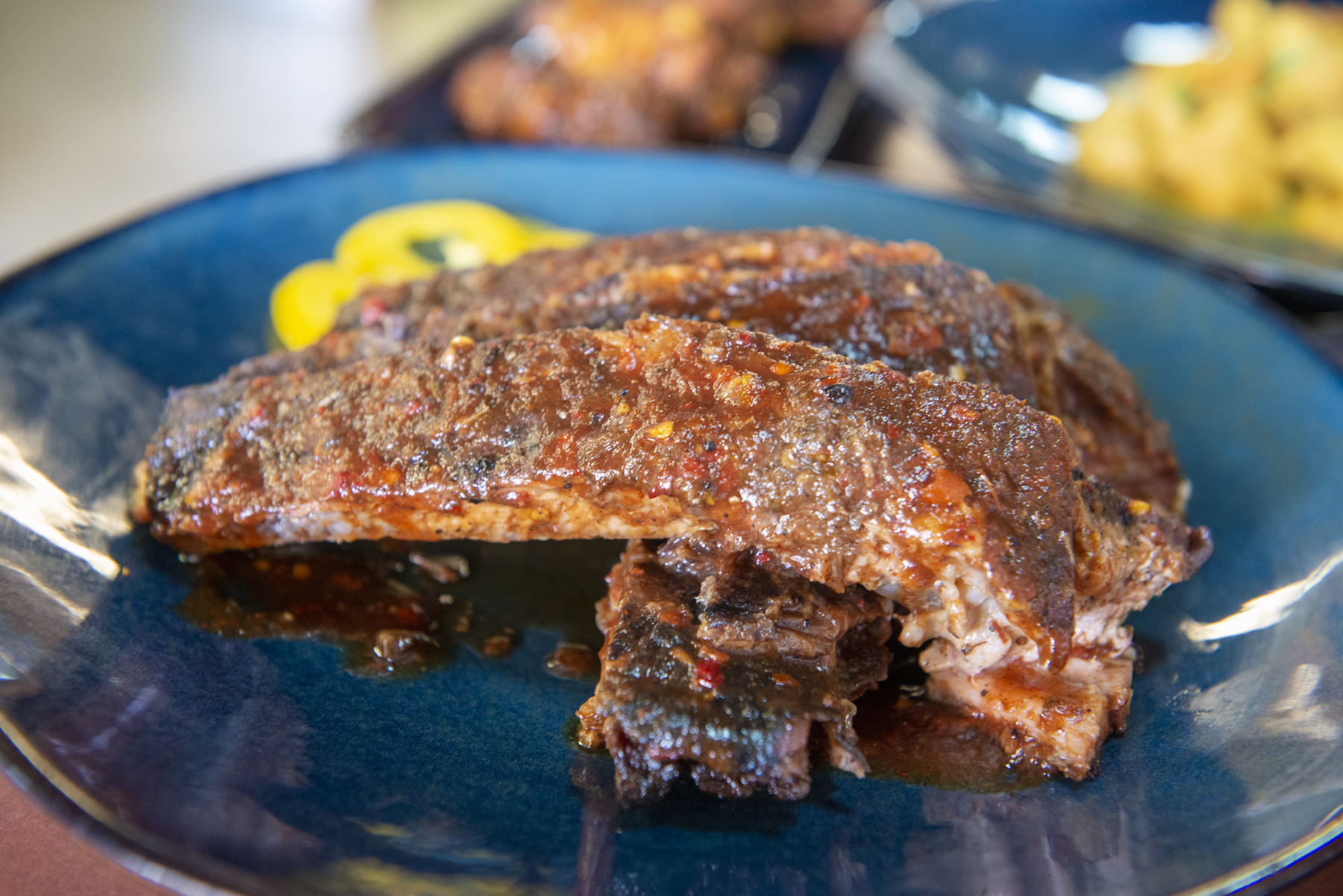
The roadside grill changed the sensory landscape in another way. Jerk, in particular, moved from maroon and rural traditions into a visible public ritual of smoke, spice, and waiting. Good jerk is not just spicy meat. It is technique. The marinade has to penetrate. The fire has to be managed. Pimento wood contributes aroma that cannot be convincingly faked. The best jerk cooks understand distance from flame, timing of basting, and when to pull the meat before it dries out. Over the past several decades, roadside jerk has become one of Jamaica’s most recognizable food signatures, and with reason. It captures the island’s preference for assertive seasoning without sacrificing craft.
A cuisine built from crossings
Jamaican food often gets reduced to a handful of famous dishes, but its real story is broader and more layered. African culinary influence is foundational, especially in methods of seasoning, one-pot cooking, fritters, stews, and the skilled use of starch. Indigenous Taíno influence remains in cassava preparations and place-based food knowledge. British colonial rule affected ingredients, dining structures, sugar production, and patterns of import. Indian indentured laborers brought curry traditions and spice use that transformed local cooking. Chinese and Lebanese migrants also shaped retail food culture, restaurant life, and household tastes in lasting ways.
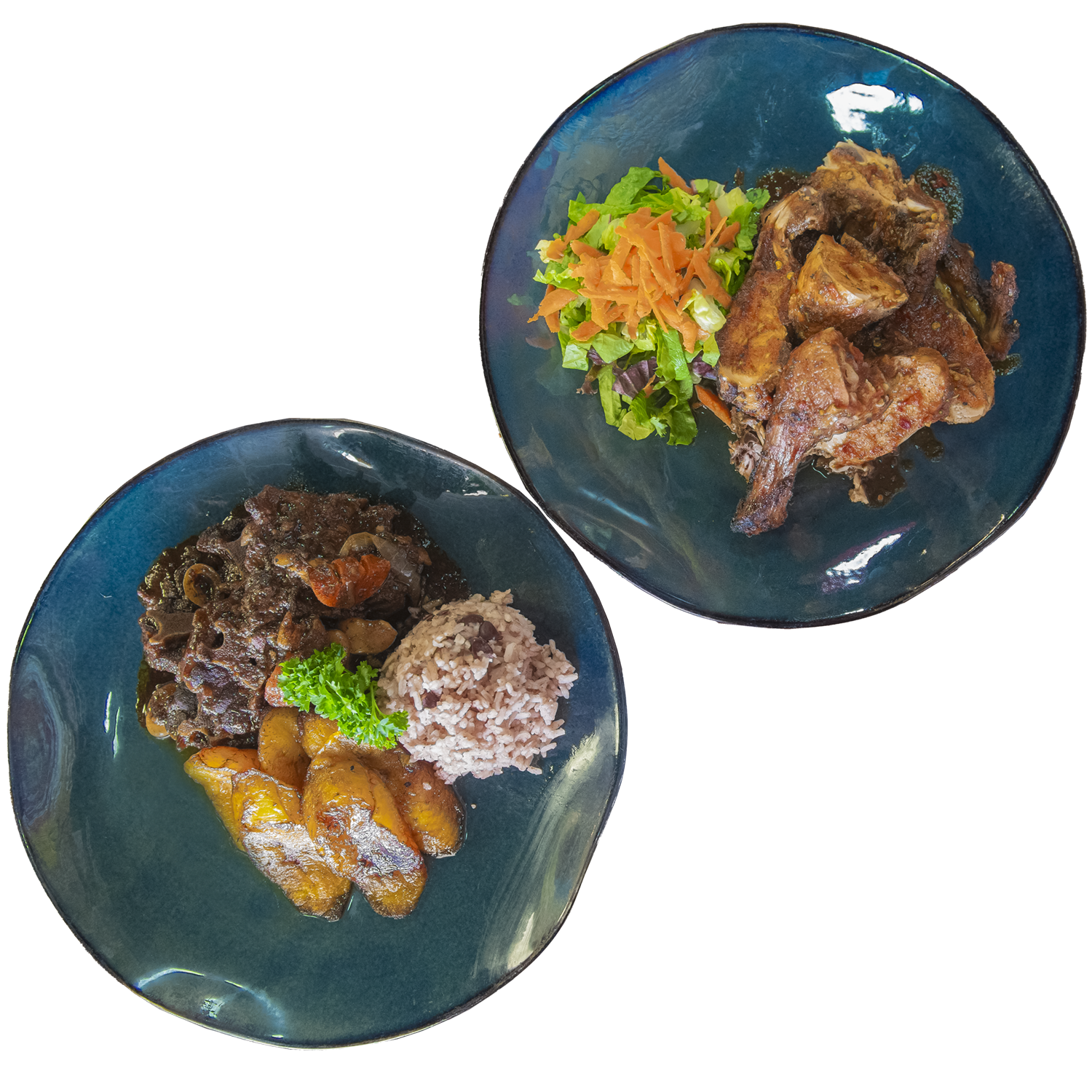
You can taste those crossings in ordinary dishes. Jamaican curry goat is not Indian curry reproduced in the Caribbean. It is something else, developed over time through local adaptation, different cuts of meat, different heat levels, fresh thyme, Scotch bonnet, allspice, and the practical realities of Jamaican kitchens. Fried rice from a Jamaican Chinese takeaway can sit comfortably in the same weekly routine as stew peas, patties, and escovitch fish. That coexistence is not confusion. It is the record of a society making a cuisine from multiple inheritances.
One of the mistakes outsiders make is assuming fusion where Jamaicans see continuity. A dish does not need to be ancient in a pure sense to be traditional. If it has been cooked, sold, shared, and argued over for generations, it belongs.
What changed during the last hundred years
The most obvious change has been access. Refrigeration altered household food management. Urbanization shifted cooking time and ingredient sourcing. Packaged seasonings, imported staples, and tinned foods changed what was possible on a weekday. Migration, both internal and international, changed taste expectations. People who moved to Kingston from rural parishes brought one set of habits; people who returned from Britain, Canada, or the United States brought another. Restaurants expanded the public experience of dishes once associated mainly with home or special occasions.
There is also the matter of labor. Traditional Jamaican cooking can be demanding. It requires peeling, grating, pounding, soaking, washing, roasting, and long simmering. As more women entered formal employment and households had less time for extended cooking, shortcuts became not just understandable but necessary. Store-bought coconut milk replaced hand-grated coconut in many homes. Ready-mixed jerk seasoning took the place of custom blends. Frozen patties became the practical answer to hunger jamaican food centennial on the move.
Not all change has improved the food. Some convenience products flatten flavor into salt, artificial smoke, and generic heat. Some commercial kitchens cook too fast, too hot, or too carelessly. Festival can turn greasy instead of tender. Oxtail can become sticky and oversweet. Rice and peas can lose the quiet perfume of fresh thyme and scallion under too much powdered seasoning. That said, modernization has also widened access. Dishes once limited by skill, geography, or time are now available to more people more often. The trade-off is real. Convenience democratizes and dilutes at the same time.
Signature dishes, and why they still matter
Certain dishes continue to carry disproportionate cultural weight because they concentrate so much memory in a single serving. Ackee and saltfish remains the breakfast most likely to symbolize Jamaican nationhood, especially when paired with fried dumpling, boiled green banana, or roasted breadfruit. Jerk remains the dish most likely to announce itself before it appears, because the smell reaches you first. Patties, despite their humble format, deserve respect as one of the island’s great portable foods. Their appeal lies in balance: flaky crust, seasoned filling, hand-held ease, broad affordability.
Escovitch fish is another dish that says more than it seems. At its best, the fish is crisp without being hard, and the pickle of carrot, onion, and Scotch bonnet sharpens the palate without drowning the fish itself. It is a dish of texture and timing. Leave it too long and the crispness softens. Serve it right and it feels both celebratory and exacting.
Then there is stew peas, one of the most underestimated dishes in the Jamaican repertoire. Outsiders often misread it as simple bean stew. It is not. Good stew peas is smoky, creamy, savory, herbaceous, and structurally satisfying. The spinners matter. The coconut milk matters. The salted meat or pig’s tail, when used, must season the pot rather than dominate it. It is everyday food with the complexity of something far grander.
The diaspora effect
No honest account of the jamaican food centennial can ignore the diaspora. Over the past century, Jamaicans carried recipes and cravings abroad, then reworked them under new conditions. Some adaptations were forced by ingredient scarcity. Scotch bonnet might be hard to source, so cooks substituted habanero or toned the heat down. Callaloo might be replaced with spinach or amaranth. Fresh ackee could not travel easily, so canned ackee became standard in many overseas households. Other changes reflected audience. Restaurants in London, Toronto, New York, and Miami often adjusted sweetness, heat, portion size, or presentation to suit local expectations.
Diaspora cooking has preserved Jamaican food in one sense and transformed it in another. Sometimes a dish freezes in the memory of the migrant while the original continues evolving on the island. That is why debates break out so quickly among Jamaicans abroad and Jamaicans at home. Which patty crust is correct. Whether jerk can be oven-finished. How much browning belongs in stew chicken. Whether “authentic” means old-fashioned, home-style, regionally specific, or simply familiar from childhood.
These debates matter because food is one of the most durable forms of identity. It survives accent shifts, climate differences, and long absences. Ask a Jamaican in the diaspora what they miss, and the answer often arrives as aroma before language: pimento smoke, a just-cut jelly coconut, frying plantain, escovitch vinegar, fresh thyme bruised between fingers.
New Jamaican cooking is not abandoning the old
Some of the most interesting cooking in Jamaica right now is happening in the space between heritage and reinvention. Younger chefs are revisiting ingredients that previous generations treated as ordinary, then presenting them with sharper sourcing, cleaner technique, or more deliberate storytelling. Breadfruit appears as mash, chips, or flour. Cassava returns in refined forms beyond the familiar bammy. Local cacao, coffee, and tropical fruits are receiving more serious culinary treatment. Chefs are aging rum for sauces, curing fish with island citrus, and building tasting menus that do not apologize for being Jamaican first.
This can go wrong. Reinvention sometimes drifts into performance. A dish gets plated beyond recognition, stripped of context, or priced into irrelevance. There is a thin line between elevating a cuisine and distancing it from the people who kept it alive. The strongest chefs understand that line. They know that refinement should clarify flavor, not erase memory.
One of the healthier shifts has been a renewed respect for farmers, fishers, and small producers. Better restaurants are asking harder questions about where their ingredients come from and how reliable those supply chains really are. That matters in an island context, where tourism can create pressure to prioritize imported consistency over local seasonality. A chef may want tomatoes of identical size every week, but Jamaica’s best food has rarely depended on visual uniformity. It has depended on judgment, ripeness, and adaptability.
What the next century will have to wrestle with
The future of Jamaican food will not be decided by nostalgia alone. Several pressures are already shaping it. Climate variability affects farming in obvious ways, from drought stress to hurricane damage. Coastal ecosystems matter for fish jamaican food centennial and shellfish. Imported food remains deeply entangled with local consumption. Younger people may love traditional dishes yet have less time or fewer opportunities to learn them properly. Tourism can provide economic support while also encouraging simplification, where a cuisine gets reduced to a few reliable crowd-pleasers.
There is reason for optimism, but it requires practical work. Culinary heritage is not preserved by speeches. It survives when recipes are taught, ingredients are grown, and skilled cooking remains economically viable. It also survives when people value the less glamorous dishes, not just the internationally famous ones. Jamaica does not need to be represented only by jerk and patties, however excellent they are. It also deserves recognition for rundown, pepper pot, ital stews, blue drawers, cassava pone, duckunoo, and the whole family of soups and teas that rarely get exported well.
A sensible future for Jamaican food probably depends on a few linked commitments.
Local agriculture needs stronger support, especially for crops that define the cuisine rather than merely supplement it.
Cooking knowledge has to be transmitted in homes, schools, and professional kitchens, because technique disappears faster than recipes.
Restaurants and food businesses should treat Jamaican ingredients as assets, not rustic props.
Tourism should make room for regional depth, not just a standardized “island flavor” script.
Diaspora communities can help sustain demand for real ingredients and skilled cooking, provided they resist reducing the cuisine to nostalgia alone.
That is not a romantic agenda. It is a practical one. Cuisines stay alive when they remain useful, delicious, and adaptable under pressure.
The taste of continuity
Spend enough time around Jamaican food and one truth becomes hard to ignore. The cuisine has always known how to carry contradiction. It is rooted and mobile, humble and showy, thrifty and indulgent, old-fashioned and restless. It can feed a construction worker before dawn and anchor a white-tablecloth dinner at night. It can comfort, challenge, and boast without changing its accent.
A centennial frame sharpens appreciation for that resilience. One hundred years ago, a Jamaican cook still had to judge heat by feel, salt by instinct, and ripeness by eye. Much of that remains true now, even in modern kitchens with induction burners and digital thermometers. The tools change, but good food still depends on attention. You cannot fake balance in a curry, or tenderness in a stewed tail, or the exact point where a festival turns from pale dough to bronzed sweetness.
That is why Jamaican food continues to travel so well. People respond to its force, certainly, but also to its integrity. The flavors are assertive because the cuisine knows what it is. Smoke should taste like smoke. Pepper should taste alive, not decorative. Coconut should contribute depth, not perfume alone. A plate should feel abundant, but not careless.
Seen through the lens of the jamaican food centennial, the cuisine’s achievement is not simply that it survived a hundred years. It is that it kept evolving without losing its center. The dishes changed shape, crossed oceans, entered restaurants, adapted to packaging, and met new generations with new appetites. Yet the best of them still taste like they come from somewhere specific, worked by specific hands, under specific conditions.
That kind of continuity is rare. It deserves to be noticed slowly, forkful by forkful, with enough respect to taste both the past and the possibility still simmering underneath it.
Reggae Pot Jamaican Grill
Address: 7562 S University Blvd C, Centennial, CO 80122
Phone number: +13039975623
FAQ About Jamaican Food Centennial
What is typical Jamaican food?
Typical Jamaican food features bold, vibrant flavors created by blending African, Taino, European, and Asian influences.
What is a famous Jamaican dish?
The most famous Jamaican dish is Ackee and Saltfish, which is the national dish of Jamaica.
What are the top 10 foods to eat in Jamaica?
AI Overview The top 10 traditional foods to eat in Jamaica are bold, flavorful dishes that mix local ingredients with global influences.